 Phuket Training
How long does it take to see results: a realistic personal training timeline in Phuket
It is the first question almost everyone asks before they hire a trainer, and it is the one most gyms answer badly. "How long does it take to see results with a personal trainer?" gets a hopeful "just a few weeks!" on one site and a vague "it depends" on the next. Both are useless if you are trying to decide whether to commit your time, your money and your holiday to it.
So here is the honest version. Most people feel a difference in the first one to two weeks: more energy, better sleep, cleaner movement. Most people can measure a difference at four to six weeks: strength numbers climb, waist and hip tape moves, clothes sit differently. And most people see an obvious difference in the mirror at eight to twelve weeks of consistent training and sensible eating. Bigger transformations sit in the three-to-six-month window. That pattern is remarkably consistent across the fitness press and the coaching world, and Women's Health puts initial changes at four to six weeks and real results at eight to twelve.
The "it depends" part is real, though, and this guide makes it concrete. Your timeline is decided by your goal, your starting point, how often you train, how you eat, how you recover, and, more than anything, how consistent you are. Below is a realistic week-by-week arc, how many sessions it actually takes, what changes first and what takes longest, and what you can honestly expect whether you are a resident training for a year or a holidaymaker in Rawai for ten days.
I am Jeejee, a NASM-certified personal trainer in south Phuket, and I coach women through fat loss, glute and body sculpting, and their first proper strength work. The single biggest reason people quit early is that they expected a transformation in two weeks and felt like failures when the mirror did not co-operate. So let me set honest expectations, because knowing the real timeline is what keeps you going long enough to actually get the result.
The realistic timeline, week by week
Results do not arrive in one lump. They arrive in layers, first things you feel, then things you can measure, then things other people notice. Here is the arc most beginners and returners follow when they train two to three times a week and eat reasonably.
| Timeframe | What is happening | What you notice |
|---|---|---|
| Week 1-2 | Nervous system learning the movements; routine forming | More energy, better sleep, less stiffness, workouts feel less awkward |
| Week 3-4 | Strength adaptations; early water and glycogen shifts | Lifting more weight, tape measure starts to move, clothes feel slightly looser |
| Week 4-6 | Measurable body-composition change begins | First visible changes to close friends and family; noticeably stronger |
| Week 8-12 | Clear, visible change to most people | Obvious difference in the mirror and in photos; a new baseline of fitness |
| 3-6 months | Compounding results; genuine transformation | Body reshapes, habits are automatic, big strength and physique gains |
Weeks 1-2, you feel it. The earliest wins are neurological and behavioural, not physical. Your brain and nerves get better at recruiting muscle, so the same exercises feel smoother and less clumsy. You sleep better, your mood lifts, and the initial soreness fades as your body adapts. You will not look different yet, and that is completely normal, so do not judge the whole journey on the first fortnight.
Weeks 3-4, you start to measure it. This is where the tape measure and the logbook earn their keep. Your strength climbs noticeably because early gains are fast for beginners, and small shifts in body water and fat start to register. Health.com notes that new exercisers typically see the first signs of progress in about two to four weeks. You may notice your waistband is a touch looser even if the scale has barely moved.
Weeks 4-6, early visible change. Around the four-to-six-week mark the people closest to you start to comment. This is the point most coaches quote as the honest "you'll start to see it" milestone, and it lines up with what a good training frequency of two to three focused sessions a week produces.
Weeks 8-12, clear results. By the two-to-three-month mark, with consistency, the change is obvious in the mirror and in photos. Your strength is in a different league from where you started, your fitness has a new baseline, and the habits are starting to feel automatic. If you commit to a twelve-week block, this is the payoff window.
Three to six months, transformation. This is where the compounding really shows. Body shape changes meaningfully, strength gains are substantial, and training is simply part of your week rather than something you have to force. Nearly every "how long did it take" answer that involves a dramatic before-and-after sits in this range, not in the first few weeks.
How many sessions does it actually take to see results?
"How many personal training sessions to see results" is really the same question wearing different clothes, but sessions and weeks are not the same thing, and confusing them is where people go wrong. Six sessions crammed into two weeks will not do what six sessions spread across six weeks will, because your body needs time and repeated exposure to adapt, not a burst.
As a rough guide, training once a week with a trainer is enough to learn technique and stay accountable, but on its own it is slow for body change unless you also train on your own between sessions. Two sessions a week is the sweet spot for most people, and two weekly sessions provide a consistent foundation that is plenty for general health, strength and moderate fat loss. Three sessions a week speeds things up if fat loss or a specific physique goal is the priority and your recovery can handle it.
In practical numbers: most beginners notice real progress after roughly six to eight quality sessions spread across six to eight weeks. If your budget only stretches to a handful of sessions, the smart play is to spread them out and train independently in between, or to use them to build a plan you can run yourself. Our guide to how often to train breaks the one-, two- and three-times-a-week scenarios down by goal, and if you only want one or two sessions to get started, the one-off session guide explains how to get the most from them.
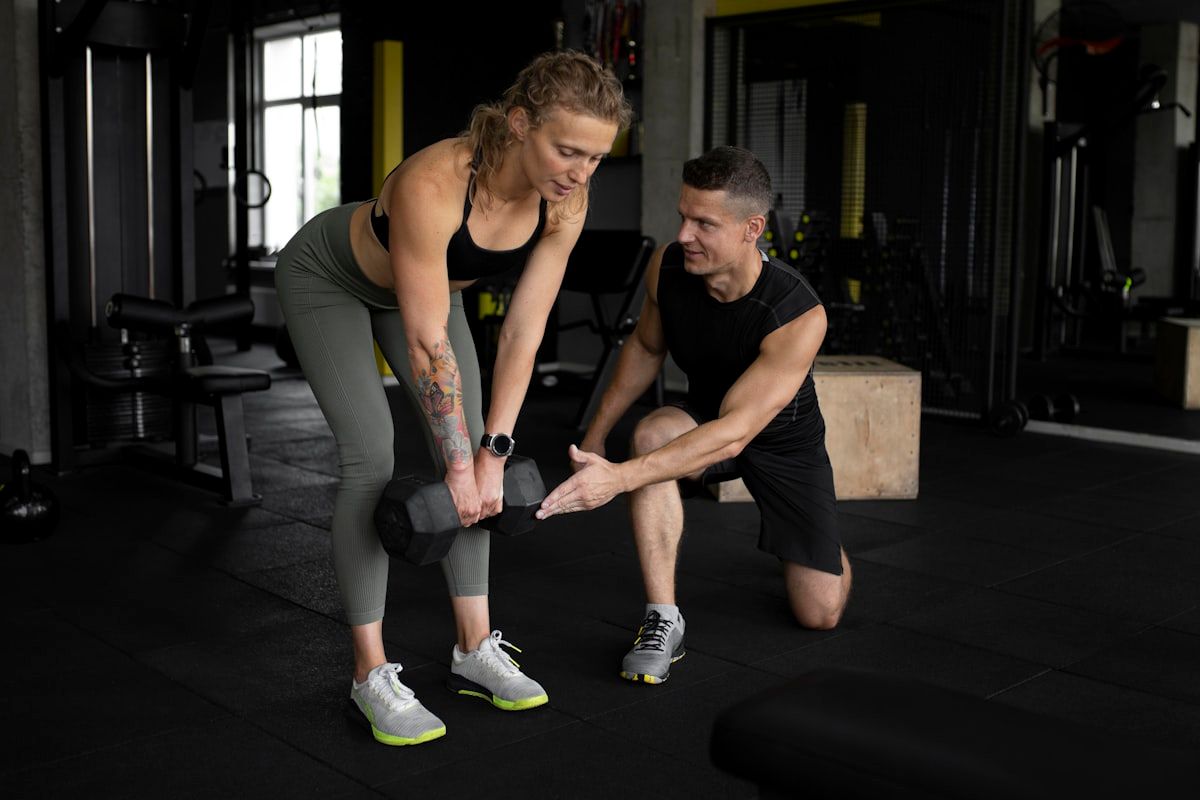
Quality sessions spread across several weeks, not crammed together, are what produce visible results.
What changes first, and what takes longest
Results do not all move at the same speed, and knowing the order stops you from panicking when the mirror lags behind. Here is the rough queue.
First (1-3 weeks): energy, sleep, mood, and how well you move. These are the "feel it" wins, and they are genuinely important because they are what keep you turning up. Early-middle (3-6 weeks): strength. Beginners gain strength fast, largely through better nerve-to-muscle recruitment, so your numbers climb before your shape does. Middle (6-12 weeks): fat loss and the first clear visual changes, assuming your nutrition supports it. Slowest (12 weeks and beyond): visible muscle and shape. Building noticeable muscle, including growing your glutes, is the longest game of all because muscle is built slowly and deliberately.
The takeaway: if you have trained for a month and feel stronger and more energetic but do not yet look dramatically different, you are not behind, you are exactly on schedule. The visual payoff is stacked toward the later weeks.
How long does it take to lose weight with a personal trainer?
Fat loss is the most common goal, so it deserves honest numbers. Most people start losing weight noticeably within four to six weeks of training consistently and eating in a modest calorie deficit, with the bigger changes landing between weeks eight and twelve. A sensible, sustainable rate is roughly half a percent to one percent of your bodyweight per week, which for many people is around half a kilo to one kilo a week, and a well-run twelve-week block can produce several kilos of fat loss while keeping the muscle that gives you shape.
Two things matter more than the exact number. First, the scale is a poor early witness. In the first few weeks you can be losing fat while gaining a little muscle and holding more water from training, so the scale barely moves even though your body is changing. That is why we measure more than weight. Second, nutrition does most of the heavy lifting for fat loss. Training builds and preserves muscle and burns some energy, but you cannot out-train a diet that is out of line with your goal. Our weight-loss personal training guide covers the realistic fat-loss arc in detail, and the nutrition guide explains exactly how a coach supports the eating side.
How long does it take to build muscle or grow glutes?
Building visible muscle is the slowest result on the list, and it is worth understanding why so you set fair expectations. Muscle is built through progressive resistance training over months, not weeks. Beginners get a helpful head start, because the well-known "newbie gains" phase means your first few months of proper training produce faster muscle and strength gains than you will ever get again, but "faster" still means months, not days.
For most women wanting a rounder, stronger lower body, expect the first visible glute and leg changes around the eight-to-twelve-week mark with two to three focused sessions a week, and genuinely noticeable shape change over three to six months. It will not happen by accident and it will not make you "bulky", because building meaningful muscle is hard and slow, which is exactly why it looks so good when you get there. If shape is your goal, our glute-building guide and the beginner strength-training guide lay out the exact approach, and progressive overload is the non-negotiable engine behind all of it.
The six things that decide your timeline
When two people start on the same day and one sees results twice as fast, it is almost never genetics doing the work. It is these six variables.
- Your goal. "Feel fitter and sleep better" arrives in a fortnight. "Lose ten kilos" or "build a visibly stronger lower body" is a three-to-six-month project. Match your expectations to the size of the goal.
- Your starting point. A complete beginner sees fast early change, because there is a lot of low-hanging fruit; someone already reasonably fit progresses more slowly because they are closer to their ceiling. Neither is better, they are just different starting lines.
- How often you train. Once a week maintains and teaches; two to three times a week is where most visible change happens. Frequency is one of the biggest levers you control, which is why the frequency guide is worth reading before you commit.
- Your nutrition. For fat loss especially, this is the single biggest factor. Great training with careless eating gives disappointing results; decent training with dialled-in eating gives great ones. A coach who ignores your food is only doing half the job, so read the nutrition guide.
- Recovery and sleep. You do not grow in the gym, you grow while you recover. Poor sleep, high stress and no rest days slow everything down. Two good sessions with proper recovery beat five rushed ones.
- Consistency. This is the quiet winner. The person who trains twice a week for three months without fail will out-result the person who trains hard for two weeks, disappears for two, and restarts. Consistency turns a decent plan into a great outcome.
Does it take longer to see results after 40?
A little, but far less than most people fear. After forty, recovery takes slightly longer and muscle is a bit harder to build and easier to lose, so timelines can stretch by a few weeks compared with your twenties. But the body stays highly trainable at any age, and plenty of people are in the best shape of their lives in their forties and fifties. The adjustments are sensible, not dramatic: prioritise strength work to protect muscle and bone, warm up properly, respect recovery, and be patient through the first month. Our personal training over 40 guide covers the realistic approach in full. The honest headline: expect results on a similar arc, perhaps a touch slower, and know that the health payoff is arguably even bigger than it is for a twenty-five-year-old.
What can you realistically expect on a one or two week Phuket holiday?
Plenty of people book a trainer for a short stay in Rawai, Nai Harn or Kata and want to know what a week or two actually buys. Be realistic: you will not transform your body in ten days, and any coach who promises you will is selling something. What you can get from a holiday block is genuine and worth it. You will feel stronger and more energetic, you will keep your routine alive instead of losing a fortnight, you will learn correct technique you can take home, and you will get a proper plan to continue with.
The smart way to use a short stay is to treat it as a kick-start, not a finish line: a few sessions to learn the movements and build momentum, plus advice on eating well while you are travelling. Our staying fit on holiday guide is built for exactly this, and if you only want a session or two, the one-off session guide explains how to make each one count. If you want to keep the momentum going after you fly home, online personal training bridges the gap.
Why you might not be seeing results (and how to fix it)
Sometimes weeks pass and the mirror will not budge. Before you blame yourself or your trainer, run through the usual culprits.
- No progressive overload. If the weights, reps or difficulty never increase, your body has no reason to change. Progress comes from gradually asking your body to do more, so your plan should get harder over time.
- Nutrition does not match the goal. This is the number one reason fat loss stalls. If you are eating at maintenance, you will get fitter and stronger but you will not lose fat. Honest tracking for a week usually reveals the gap.
- Inconsistency. Two great weeks followed by a missed week resets a lot of momentum. Turning up reliably beats occasional heroics every time.
- Under-recovery. Too little sleep, too much stress, or no rest days will flatten your progress no matter how hard you train. Recovery is part of the programme, not a break from it.
- You are measuring the wrong thing. If you only look at the scale, you will miss fat loss that shows up as a smaller waist or a stronger lift.
- Your expectations are on the wrong timeline. Expecting a visible transformation in two weeks sets you up to feel like a failure when you are actually right on track. If you have genuinely done everything right for eight to twelve weeks and seen nothing, that is the point to review the plan with your coach, and knowing how to choose a good personal trainer in the first place prevents most of these problems.
How to measure progress (beyond the scale)
The scale is the least useful tool you own for tracking real change, because it cannot tell fat from muscle from water. Weigh yourself if you like, but never let it be the only judge. Track these instead, and review them every two to four weeks rather than daily:
- Photos. Same lighting, same time of day, same poses, every two weeks. Photos catch shape changes the scale hides completely.
- Tape measurements. Waist, hips, thighs and arms tell you where you are losing fat and gaining shape.
- Strength numbers. Your logbook is proof of progress, and more weight or more reps than a month ago is a real, undeniable result.
- How your clothes fit. A looser waistband or a tighter fit through the glutes is often the first honest signal.
- Energy, sleep and mood. Easy to dismiss, but these are early, meaningful wins that predict the physical results to come.
A good trainer builds this tracking into your programme from day one, so you always have evidence you are moving forward even in the weeks the mirror is quiet. If you would rather not run all of this yourself, that measurement and accountability is exactly what a coach provides.
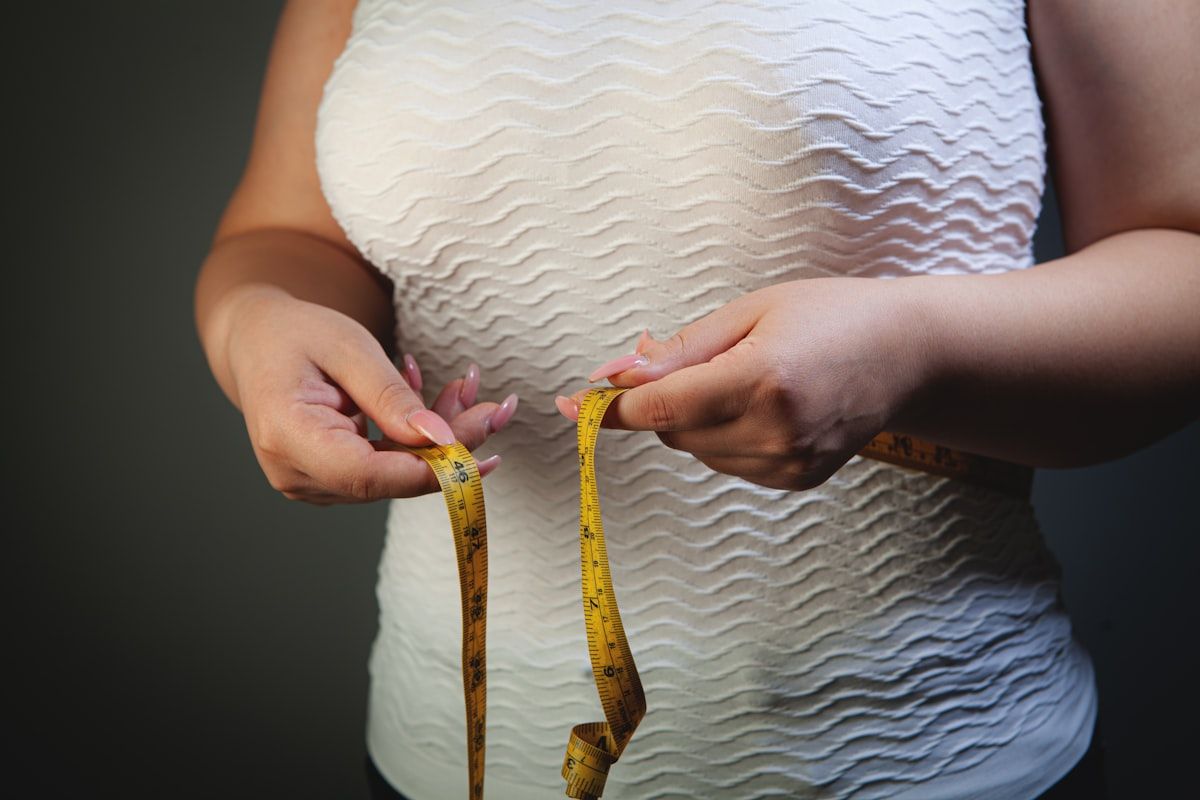
Tape measurements, photos and strength numbers show progress the scale hides completely.
How a Phuket trainer speeds up your results
You can get results on your own, but a trainer compresses the timeline, and that is really what you are paying for. A good coach gives you a plan built for your goal rather than a generic routine, applies progressive overload so you keep moving forward, fixes your technique so effort is not wasted (and so you avoid the injuries that cost weeks), supports the nutrition side that decides fat loss, and, the quiet one, holds you accountable so the consistency that drives everything actually happens. That is why people generally do get results faster with a trainer than training alone.
If you are training in Rawai, Nai Harn, Chalong or Kata and want a realistic plan and honest timelines rather than hype, that is exactly how I coach. Have a look at the cost and packages guide to see what a block of sessions involves, or get in touch to talk through your goal and a sensible timeframe for it.
Related guides
| If you want to know... | Read this guide |
|---|---|
| What a block of sessions costs | Personal trainer cost in Phuket |
| How often to train for your goal | How often to train with a trainer |
| How long fat loss really takes | Weight-loss personal training |
| How to train well over 40 | Personal training over 40 |
| How to start lifting from scratch | How to start strength training |
| How a coach helps with diet | Do trainers help with nutrition |
Frequently asked questions
How long does it take to see results with a personal trainer?
Most people feel changes (energy, sleep, movement) within one to two weeks, can measure changes at four to six weeks, and see clear visible changes at eight to twelve weeks of consistent training and sensible eating. Bigger transformations typically take three to six months.
How many personal training sessions does it take to see results?
Most beginners notice real progress after roughly six to eight quality sessions spread across six to eight weeks, not crammed together. Two sessions a week is the sweet spot for most people; once a week works if you also train independently in between.
How long does it take to lose weight with a personal trainer?
Noticeable fat loss usually starts around four to six weeks, with bigger changes at eight to twelve weeks. A sustainable rate is about half a kilo to one kilo a week, so a well-run twelve-week block can produce several kilos of fat loss. Nutrition does most of the heavy lifting here.
Is two PT sessions a week enough to see results?
Yes, for most goals. Two sessions a week provide a consistent foundation and are plenty for general health, strength and moderate fat loss. Three a week can speed things up for aggressive fat-loss or physique goals, provided your recovery keeps up.
Why am I not seeing results with my personal trainer?
The usual causes are no progressive overload, nutrition that does not match your goal, inconsistency, poor recovery, or measuring only the scale. Give any well-run plan eight to twelve consistent weeks before judging it, then review it with your coach.
Does it take longer to see results after 40?
Slightly, because recovery is a little slower and muscle is a bit harder to build, but the body stays very trainable at any age. Expect a similar arc, perhaps a few weeks longer, with strength work and recovery prioritised.
How long does it take to build muscle or grow glutes?
Visible muscle is the slowest result. Expect the first visible glute and leg changes around eight to twelve weeks with two to three focused sessions a week, and genuinely noticeable shape change over three to six months. Progressive overload is essential.
Can I get results in a one or two week Phuket holiday?
Not a full transformation, but a genuine kick-start: more energy, correct technique, a maintained routine and a plan to continue. Treat a short stay as a beginning, and consider online coaching to keep the momentum after you fly home.
Do you really get results faster with a trainer than training alone?
Generally yes. A trainer gives you a goal-specific plan, applies progressive overload, fixes technique so effort is not wasted, supports nutrition, and provides the accountability that drives consistency, all of which compress the timeline.
Sources
Ready to put this into practice?
Book a free consultation